
Tennis: history, rules and fun facts
Why take an interest in Tennis ?
Tennis is one of the most widely played sports in the world. More than 60 million people play it across every continent, from the clay courts of Paris to the hard courts of Tokyo. However, many people have never really taken the time to learn more about it.
And that’s a shame, because tennis is much more than simply hitting a ball over a net.
On the one hand, it is a sport of strategy where every point is carefully constructed. On the other hand, it requires technique, since even the way a player holds a racket can influence performance. Above all, tennis is accessible to people of all ages, whether you are a 7-year-old beginner or a 70-year-old enthusiast.
👉 In this article, you will discover:
- The fascinating history of tennis
- A few fun facts about Tennis
- And most importantly a clear and simple overview of the rules to help you understand how the sport is played



From real tennis to modern courts
Tennis did not begin with the rackets we know today. Instead, its origins can be traced back to the 12th century in France, with a game known as jeu de paume. Initially, monks struck the ball with their hands inside covered courts. Overtime, gloves and simple rackets were introduced.
Interestingly, the very name “tennis” is believed to come from the French word “tenez!” (“take this!”), shouted before each serve.
Overtime, the game became a national passion. French kings were fascinated by it. King Francis I was known for playing enthusiastically. By the 16th century, Paris was home to more than 1,800 jeu de paume courts.
The Birth of Modern Tennis
It was not until 1873 that tennis began to resemble the sport we know today. A Welsh officer named Walter Clopton Wingfield patented a game played outdoors on grass, using rackets and a net. He called it “Sphairistike,” an unpronounceable Greek name that was soon replaced by tennis.
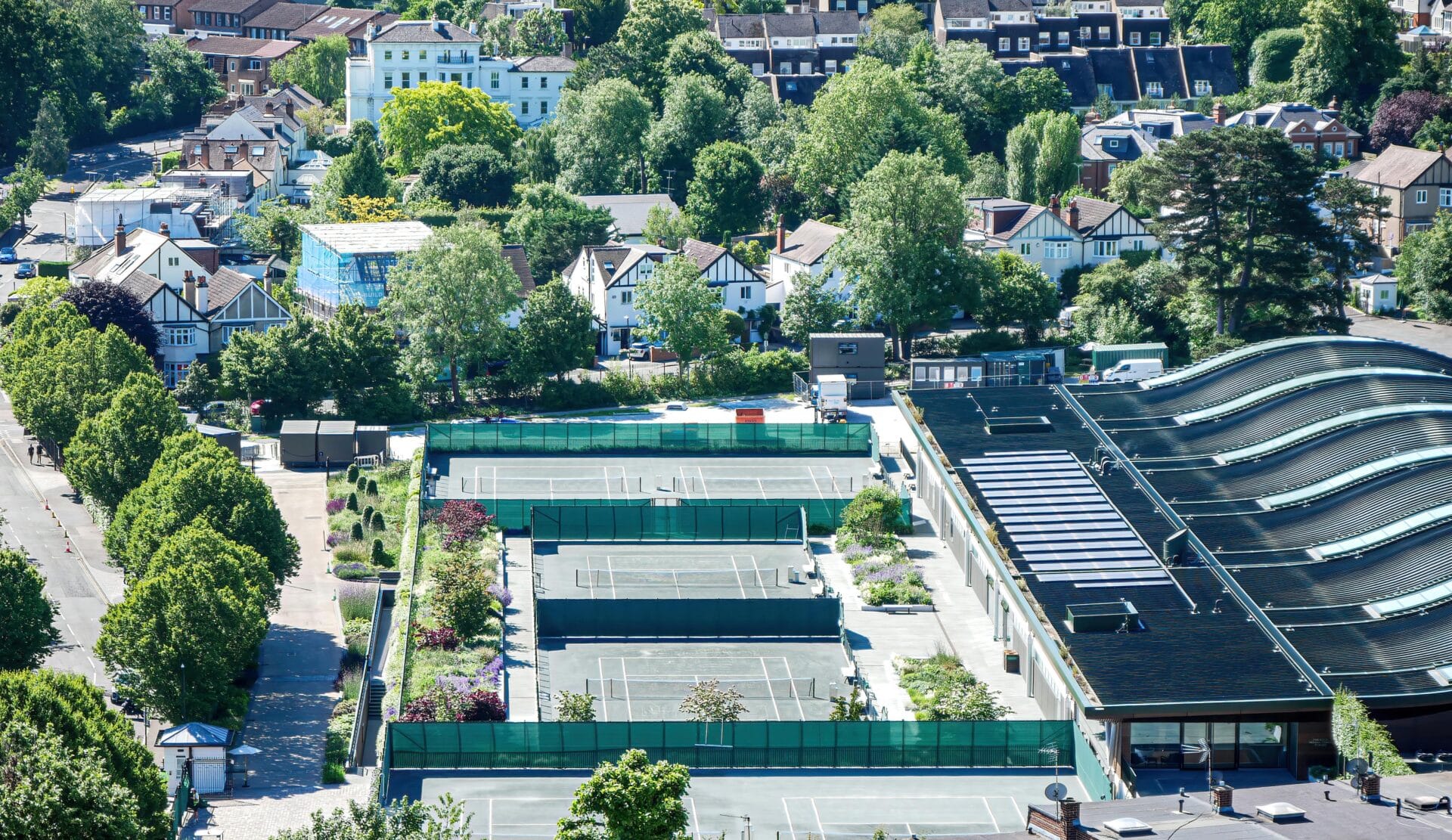
The following year, in 1874, the game arrived in the United States. In 1877, the very first official tournament was held at Wimbledon, England. Modern tennis was born.
The Rise of Major Tournaments
As the sport grew in popularity, major competitions quickly took shape. Among the first tournaments, the US Open was established in 1881, Roland-Garros in 1891, and the Australian Open in 1905. Together with Wimbledon, these events form the four Grand Slam tournaments, the most prestigious competitions in world tennis.
In 1900, the Davis Cup was created to allow nations to compete against one another. It remains one of the oldest team competitions still in existence today.
Worldwide Popularity
For many years, tennis was reserved for a social elite, but it became accessible to the general public during the 1960s and 1970s. The Open Era began in 1968, allowing professional players to compete in major tournaments. As a result, tennis became increasingly popular internationally.
Today, players like Rafael Nadal, Novak Djokovic, Serena Williams, and Carlos Alcaraz continue that legacy.
4 fun facts about tennis

Why 15, 30… and 40 ?
The tennis scoring system intrigues everyone. Why 15, 30, 40 instead of 1, 2, 3? The most widely accepted explanation dates back to the Middle Ages. A clock divided into four quarters of 15 minutes may have been used to keep track of points. However, the third quarter, which would have been 45, was likely shortened to 40 to make it easier to announce the next stage of the game, the “game”.

Services exceeding 260 km/h
The serve is the ultimate weapon for professional players. The world record belongs to Australian player Sam Groth, who hit a serve at 263.4 km/h in 2012. To put things into perspective: that’s faster than a car on a highway.
Wimbledon’s unusual traditions
Wimbledon is the oldest and most traditional tennis tournament in the world. Players are required to wear all-white clothing, a strict rule that is still enforced today. The tournament is also famous for serving more than 28,000 portions of strawberries and cream every year — an iconic British tradition that has become inseparable from the event.

The longest match in history
In 2010, at Wimbledon, John Isner and Nicolas Mahut played the longest match in tennis history. Latsting 11 hours and 5 minutes, the match spread over three days. Remarkably, the fifth set alone ended with the incredible score of 70–68. At the time, there was no tie-break rule in place for that stage of the match.
How is Tennis played ?
OBJECTIVE OF THE GAME AND COMPETITIONS
The objective of tennis is simple: hit the ball into your opponent’s court in a way that prevents them from returning it successfully.
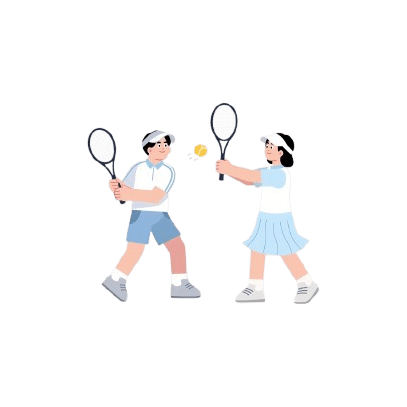
Matches can be played in singles (one player against another) or in doubles (two-player teams competing against each other). In addition, mixed doubles feature one man and one woman on each side.
Among the most prestigious competitions are:
- The four Grand Slam tournaments: Roland-Garros, Wimbledon, the US Open, and the Australian Open.
- The ATP Finals and WTA Finals, which bring together the season’s top players.
- The Davis Cup and the Billie Jean King Cup, where national teams compete for international titles.
MAIN RULES
Tennis uses a unique scoring system organized into points, games, sets, and matches.
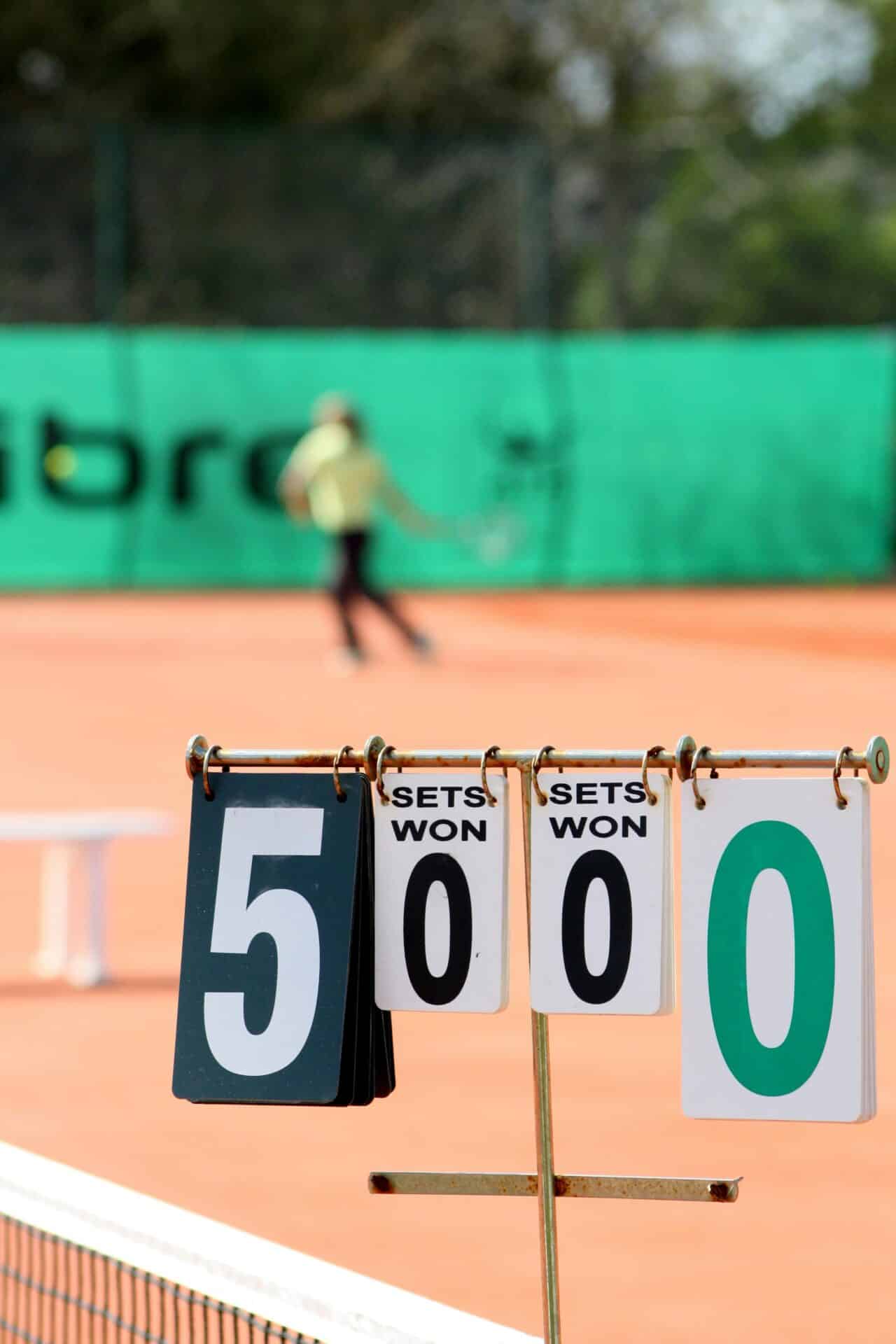
First, players earn points using the sequence 0, 15, 30, 40, and game.
Next, a player wins a game by earning four points while maintaining at least a two-point lead. When both players reach 40, the score is called deuce.
Afterward, games are combined to form sets. Generally, a player must win six games with a two-game advantage to claim a set. If the score reaches 6-6, a tiebreak is usually played.
Finally, matches are decided by either the best of three sets or the best of five sets, depending on the competition.
Every point begins with a serve. Players receive two attempts to place the ball inside the correct service box. If both attempts fail, a double fault is called and the point is awarded to the opponent.
Common mistakes include hitting the net, sending the ball outside the court boundaries, or allowing the ball to bounce twice before returning it.
COURT AND EQUIPMENT
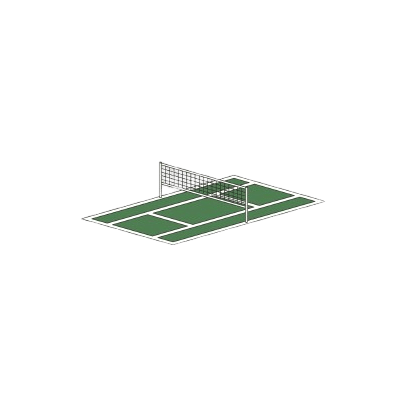
A standard tennis court measures 23.77 metres in length. Its width is 8.23 metres for singles matches and 10.97 metres for doubles matches. A net measuring 91 centimetres high separates the two sides.
Several playing surfaces are used in professional tennis:
- Clay courts (e.g., Roland-Garros): slower rallies and higher bounces
- Grass courts (e.g., Wimbledon): faster play and lower bounces
- Hard courts (e.g., US Open and Australian Open): balanced playing conditions
- Synthetic surfaces: commonly used at recreational and indoor facilities
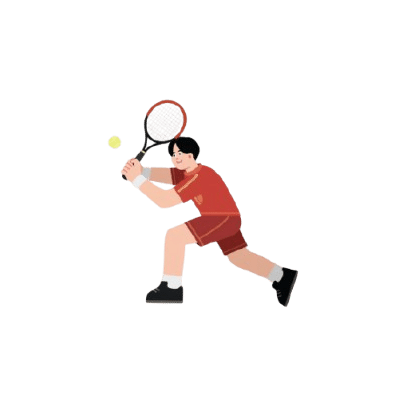
As for equipment, players use a racket made from lightweight materials such as graphite. Most rackets weigh between 270 and 340 grams.
Meanwhile, tennis balls are yellow, pressurized, and covered with felt to ensure a consistent bounce.
Fortunately, getting started is relatively affordable. A beginner only needs a basic racket, suitable tennis shoes, comfortable athletic clothing, and a few tennis balls.
Join us for some sport !
🎉 Spotlight on BougeBouge Events🎉
 On the program : sports for everyone!
-
BOUGEBOUGE GATINEAU URBAN TRAIL ( 06/07/2026) – Looking to try trail running? This event is the perfect opportunity to discover trail running on accessible and challenging courses right in the heart of Gatineau.
- WAKEFIELD COVERED BRIDGE RACE (10/11/2026) – Run through the stunning autumn landscapes of Wakefield and explore one of the most iconic sites in the Outaouais region.
-
MOUNT ROYAL MARATHON (11/01/2026) – End the season on a high note with an unforgettable trail experience on the famous Mount Royal trails, right in the heart of Montreal.
Whether you’re a passionate runner, an outdoor enthusiast, or simply looking for a fun and festive activity, upcoming BougeBouge events offer a unique sporting experience across Quebec. Ready, set… Move! 

Book your spot now !
And to make sure you don’t miss anything, you can follow us on our social media channels !