
The smell of the forest, the crunch of the ground beneath your feet, a climb that makes you curse… followed by a downhill that makes you feel like a happy little kid. Welcome to the world of trail running, also known as trail racing.Whether you're a road runner looking for something new or a curious walker ready to take things up a notch, this guide has everything you need to get started on the right foot: how trail running differs from traditional running, essential gear, our best tips, and how to choose your first trail race.
Whether you're a road runner looking for something new or a curious walker ready to take things up a notch, this guide has everything you need to get started on the right foot: how trail running differs from traditional running, essential gear, our best tips, and how to choose your first trail race.
What's a trail run ?
Contrary to what some people may think, trail running isn’t just for elite athletes. Distances range from just a few kilometres, perfect for a first experience, to ultra-trail races covering more than 100 km. In Quebec, the sport is growing in popularity: the scenery is beautiful, trail networks are extensive, and events offer a welcoming, community-oriented atmosphere.
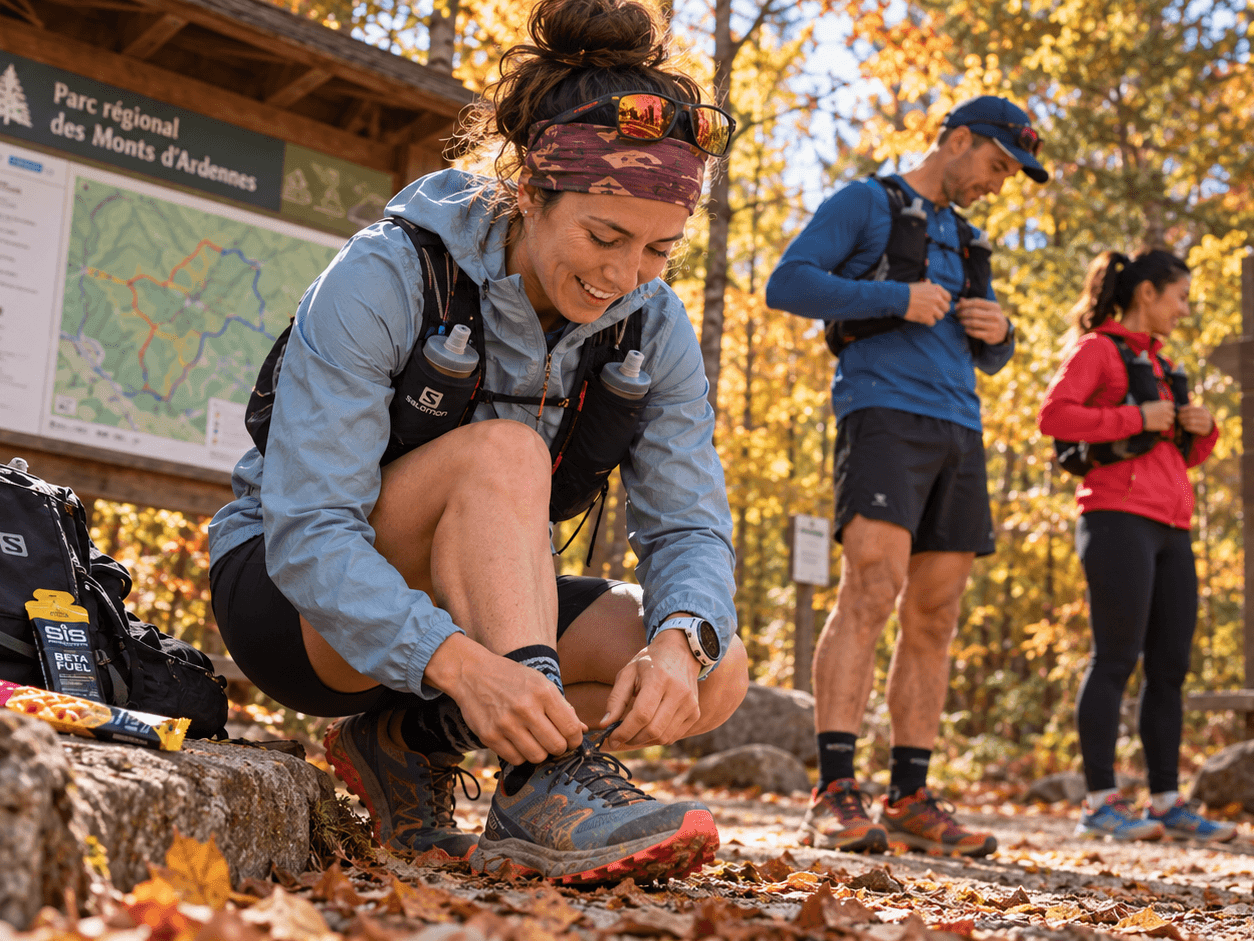
Trail Running vs. Road Running: What’s the Difference?
If you already run on pavement, much of trail running will feel familiar, but a few adjustments will be necessary.
The rythm
Forget your usual pace per kilometre. On trails, the terrain and elevation changes naturally slow you down. Instead of focusing on speed, run according to your effort level, paying attention to your breathing and how your body feels.
Terrain
Uneven surfaces put more strain on your ankles, stabilizing muscles, and balance. Every step is different.
Elevation Gain and Loss
Uphill sections work your glutes, calves, and cardiovascular system, while downhill sections put more strain on your quadriceps. Walking on steep climbs is perfectly normal (and even a smart strategy).
Focus
You need to keep your eyes on the trail, anticipate obstacles, and read the terrain.
Equipment
Trail running shoes with aggressive grip, appropriate clothing, and hydration gear… the logistics are a little more involved.
The spirit of trail running
Less focus on the clock, more emphasis on enjoyment, personal challenges, and community. Trail running is often a group experience, with plenty of encouragement and support along the way.
Essential Gear for Trail Running
You don’t need to spend a fortune to get started, but a few key items can make a real difference in terms of comfort and safety.
For organized races, always check the event's mandatory gear list: requirements vary depending on the distance and the season.
Trail Running Shoes
This is your number-one purchase. A good pair of trail running shoes offers an outsole with grippy lugs, better protection against rocks, and a more durable upper. Here are a few key factors to consider:
-
Terrain type: smooth, dry trails (moderate lugs) or muddy, technical terrain (deeper, more aggressive lugs).
-
Cushioning: more cushioning for longer distances, less for a better feel of the ground beneath your feet.
-
Fit: leave a little extra room in the toe box, as your feet swell during exercise and your toes tend to slide forward on downhill sections.
Clothing
Choose moisture-wicking technical fabrics and avoid cotton. In Quebec, where the weather can change quickly, the layering system is ideal: a breathable base layer, a warm mid-layer when needed, and a lightweight, packable windbreaker. Technical running socks (without irritating seams) help prevent blisters.
Hydration and Nutrition
On the trails, you won’t find water fountains on every corner. Depending on the distance, you can opt for a hydration belt, soft flasks, or a trail running hydration vest. Bring easy-to-eat snacks that you can consume on the move, such as energy gels, bars, dried fruit, or gummy candies.
Useful Accessories
-
Headlamp: if you’re running at dawn, dusk, or in densely wooded areas.
-
Cap or headband and sunglasses: to protect yourself from the sun and low-hanging branches.
-
Trail running poles: for longer distances with significant elevation gain (optional for beginners).
-
GPS watch or running app: to track your route and elevation gain.
-
Small emergency kit: emergency blanket, whistle, bandages, and phone.
Our Tips and Tricks for Improving Your Trail Running
-
Walk uphill without feeling guilty. Even the best trail runners do it. Power hiking, with your hands on your thighs or poles in hand, helps conserve energy for the rest of the course.
-
Look 3 to 5 metres ahead. Don’t stare at your feet. Anticipating roots and rocks helps you adjust your footing smoothly.
-
Shorten your stride and increase your cadence. Short, quick steps provide better stability on uneven terrain and reduce the risk of falling.
-
Stay relaxed on downhill sections. Lean slightly forward, keep your knees bent, and hold your arms slightly out for balance. Let gravity do some of the work instead of constantly braking.
-
Run by effort, not by your watch. One kilometre on a trail can take much longer than one kilometre on the road. That’s perfectly normal!
-
Drink and eat before you need to. During longer runs, take small, regular sips of water and eat snacks at regular intervals. Don’t wait until you’re thirsty or hungry.
-
Strengthen your ankles and core. Simple exercises such as single-leg balances, squats, lunges, and planks can help reduce the risk of injury and improve stability.
-
Vary your training runs. Alternate between easy runs, hill workouts, and one longer run per week. Time spent on your feet matters more than speed.
How to Train for Your First Trail Race
If you already run a few times a week, you have a good foundation. Here’s a simple approach to get started:
-
Start with easy, short trail runs to get used to the terrain.
-
Gradually add elevation gain. Stairs, hills in your neighbourhood, and hilly parks are all excellent training grounds.
-
Gradually increase your long run, by approximately 10% per week, with an easier week every now and then to allow your body to recover.
-
Practice under race-day conditions: test your gear, hydration, and nutrition during training. Don’t try anything new on race day!
-
Make time for rest. Recovery is an essential part of training.
If you’re a complete beginner or returning to running after a break, consult a healthcare professional or running coach before increasing your training load.
Trail Running Safety and Etiquette
-
Check the weather before heading out and dress accordingly.
-
Let someone know your planned route and expected return time if you’re running alone.
-
Stay on the trail to protect wildlife and vegetation and avoid getting lost.
-
Watch out for ticks during warmer months. Wearing light-coloured, long clothing, using insect repellent, and checking your body after your run are all good habits.
-
Yield the right of way: uphill runners generally have the right of way, but courtesy is what matters most. A simple “Hello!” or “Thank you!” is always appreciated.
-
Leave no trace: take all your waste with you, including energy gel wrappers.
Frequently Asked Questions About Trail Running
No. Many events offer shorter distances that are beginner-friendly, and walking uphill is perfectly acceptable.
Yes, for easy, dry trails. However, trail running shoes provide significantly better grip and protection on wet, muddy, or rocky terrain.
For a 5 to 10 km trail race, a few weeks of consistent training are often enough for an active runner. For longer distances, plan for several months of preparation.
Water or soft flasks, snacks, a lightweight windbreaker, your phone, and any mandatory gear required by the event.
Each season has its own charm: spring (mud and fresh beginnings), summer (lush greenery), fall (spectacular colours), and even winter with the right gear.
Ready to Get Started?
The best way to discover trail running is to sign up for a race and set yourself a goal. At BougeBouge, we offer trail running events for all levels, set in beautiful locations that will make you want to lace up your shoes and hit the trails.
👉 Explore our trail running events and register today
DIscover our activities
 " data-mce-resize="false" data-mce-placeholder="1" class="mce-object mce-object-script" width="20" height="20" alt="<script>">