
Ice climbing, we explain!
Looking for a sporting activity for those long, monotonous winters? How about ice climbing?
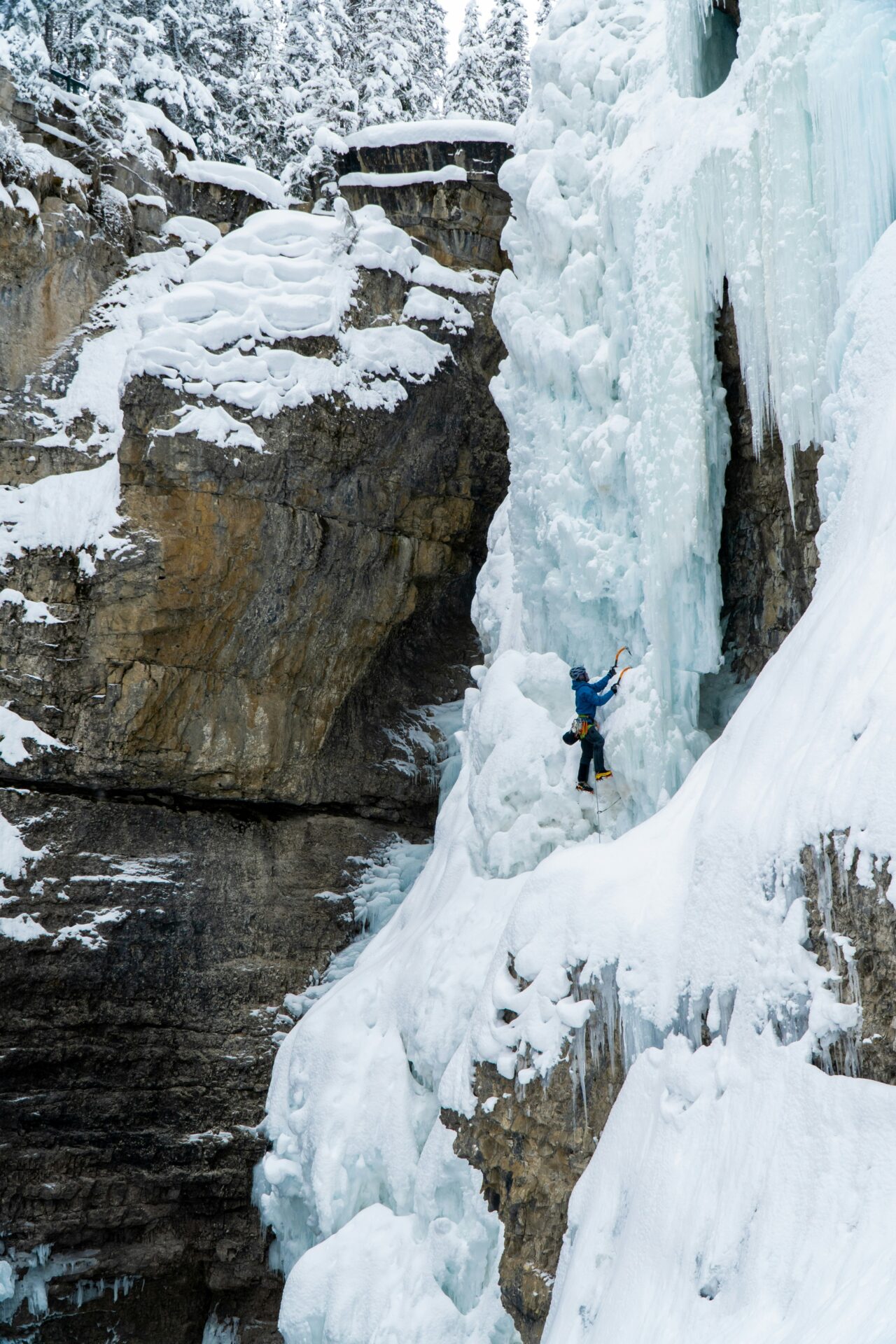
Yes, you heard right: those magnificent frozen waterfalls that adorn the Canadian environment can become your playground this winter!
Ice climbing is the perfect opportunity to combine thrills, enchanting scenery and challenging yourself. So set aside your TV, strap on your crampons, grab an ice axe and head off on an adventure. I promise, you won’t regret it!
What is ice climbing?
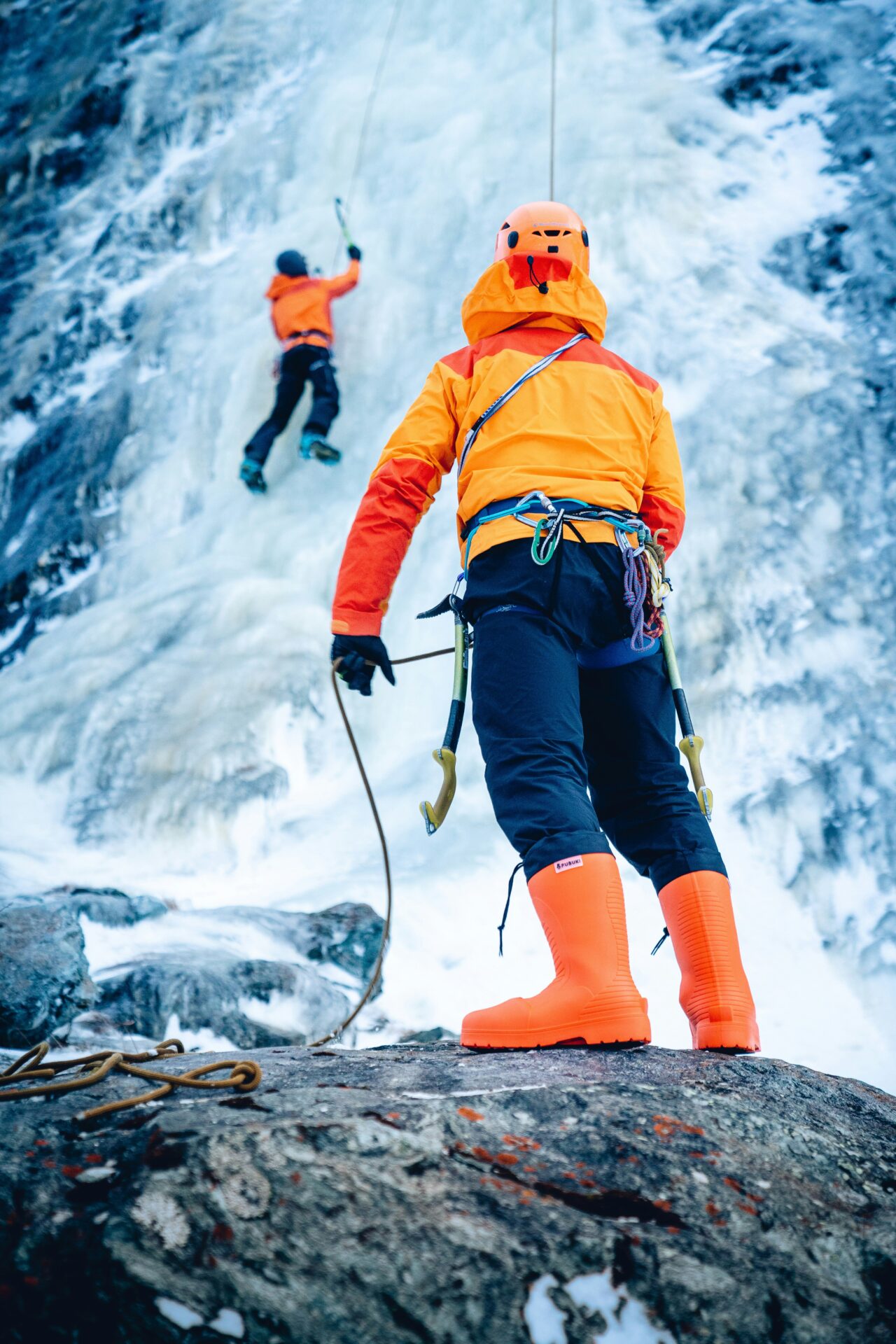
Ice climbing, as the name suggests, involves climbing on icy surfaces. These surfaces can be frozen waterfalls, ice-covered rock faces or even artificial structures. It’s a demanding sport that combines strength, endurance and precision. Whether you’re a beginner or a seasoned climber, every ascent is a unique adventure.
The origins of ice climbing
Ice climbing has its origins in mountaineering in the 19ᵉ century, at a time when Alpine explorers were developing techniques for overcoming glaciers and frozen walls. It wasn’t yet a sport, but a necessity for reaching the summits. In those days, mountaineers used rudimentary tools: wooden and metal picks, as well as homemade iron crampons.
In the early 20ᵉ century, ice climbing evolved with the appearance of specific equipment, such as front-point crampons and the first technical ice axes. These innovations marked the transition to a sporting discipline in its own right, combining physical strength, endurance and precision.
Today, ice climbing is recognized worldwide and includes competitions such as the Ice Climbing World Cup, organized since 2002. However, official recognition as a sport has taken time in some countries. In France, for example, ice climbing was only recognized as an official sport in December 2022. This development underlines the progress made by this fascinating discipline, which continues to attract amateurs and experts alike in search of thrills and spills.
The equipment you need
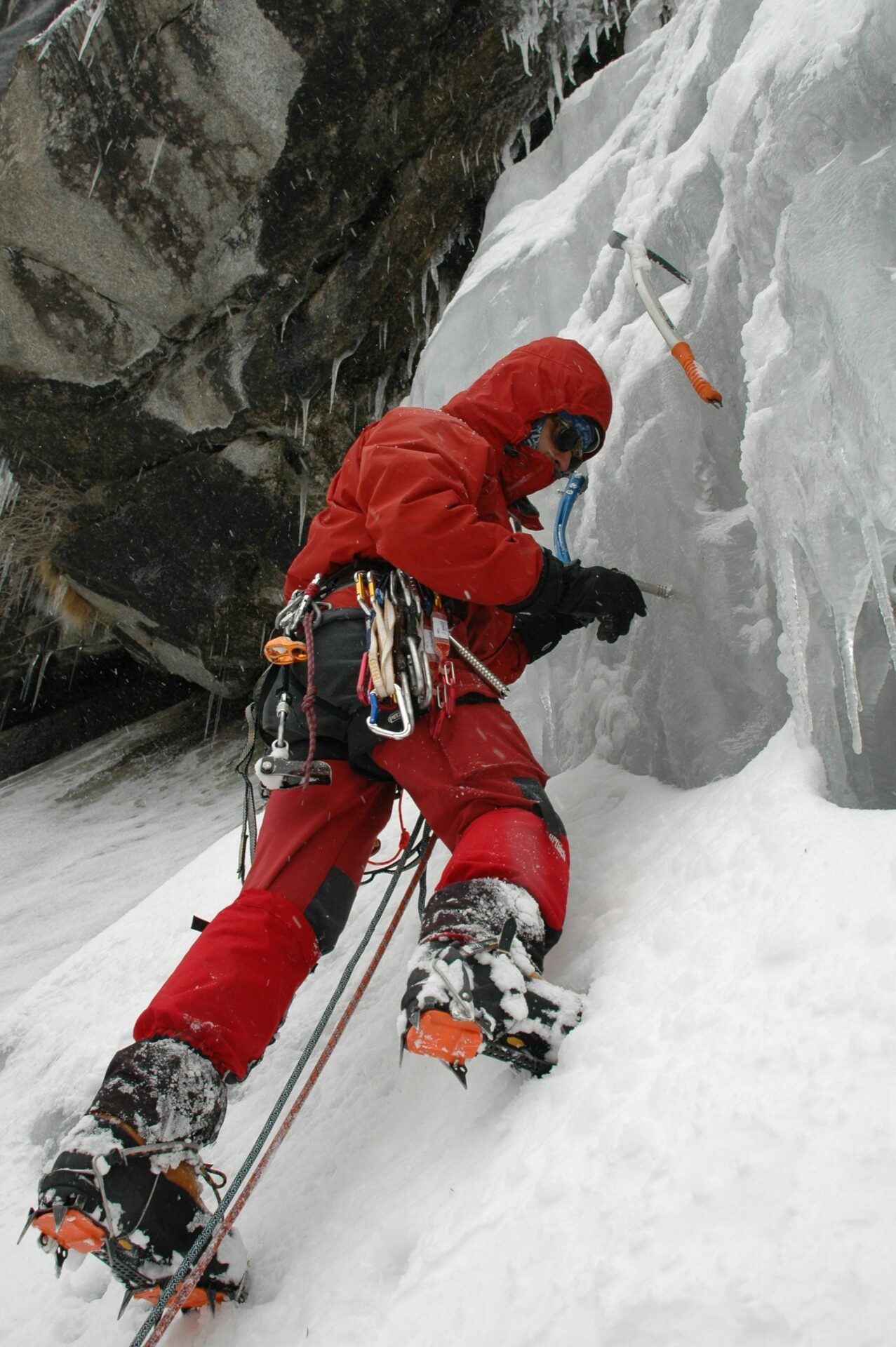
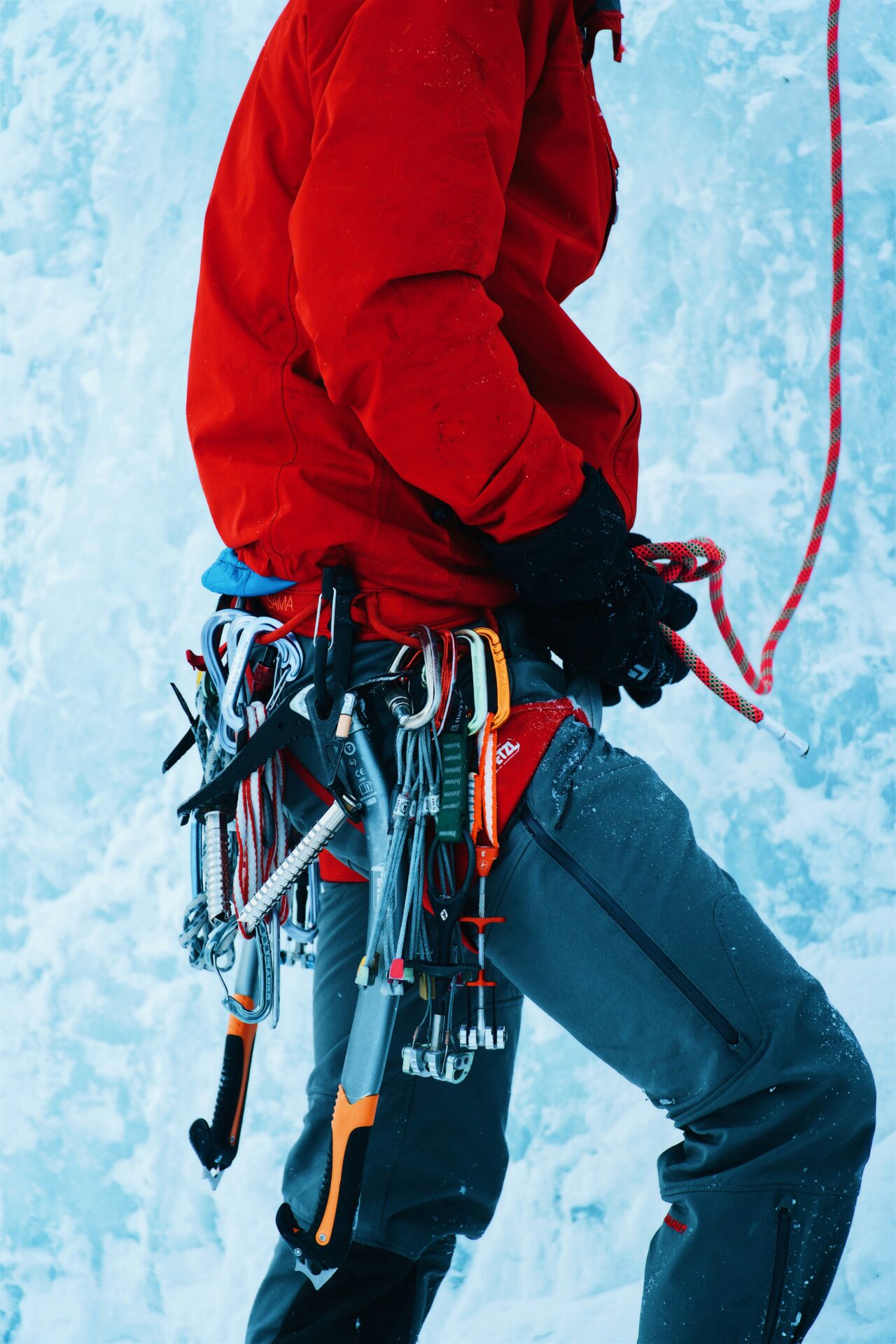
To practice ice climbing safely, it’s essential to be properly equipped. Here are the essentials:
- Technical ice axes: These specific tools enable you to carve solid holds in the ice to progress and maintain your balance. They are designed to be sturdy yet lightweight.
- Crampons: Attached to the bottom of your boots, crampons have sharp points for maximum grip on icy surfaces.
- Harnesses, ropes and karabiners: Essential for safety, these items enable you to climb with a partner who can counter-assure you in the event of a fall.
- Ice screws: these are small metal devices that you insert into the ice to create solid anchor points for the rope.
- Helmet: To protect you from shards of ice that may fall during the ascent.
- Appropriate clothing: Choose a layered system with a thermal base, warm insulation and a waterproof jacket. Movements must remain fluid despite the cold.
- Specialized gloves: Warm enough to cope with the cold, yet dexterous enough to handle ice axes and ropes.
BUT BEWARE, even with the best equipment, ice climbing is not an activity to be improvised. It’s essential to enlist the help of an experienced guide who’s an expert in this discipline. Indeed, ice climbing can quickly become dangerous if it is not practised according to the rules. Professional supervision not only guarantees your safety, but also enables you to learn the right techniques to make the most of this unique experience.
Where to try ice climbing?
Here are a few places to try ice climbing in complete safety, with experienced guides:
-
-
1. Parc Jean-Drapeau (Montréal)
Located on Île Sainte-Hélène, just a few minutes from downtown, Parc Jean-Drapeau offers an ideal training wall for ice climbing.
- Supervision: Courses are offered in partnership with the Zéro Gravité climbing school. You will be guided by certified instructors, who will ensure your safety while teaching you the basics of this fascinating discipline.
- Plus: proximity to the city and friendly atmosphere.
- Walls: The 8 to 12-metre icy walls are ideal for beginners wishing to learn in an accessible setting.
2. Mont Tremblant
Located right on the ski resort, this activity lets you discover climbing on a natural frozen waterfall.
- The walls: a natural frozen waterfall
- Supervision: Experienced instructors teach basic techniques, belaying and abseiling. No previous experience is required, making this an ideal option for beginners.
- Bonus: You can combine the activity with some great skiing.
3. Parc de la Gorge de Coaticook (Estrie)
For those ready to venture a little further afield, Coaticook Gorge Park, about two hours from Montreal, is a veritable paradise for ice-climbers.
- The walls: With heights ranging from 25 to 50 metres, this site offers challenges suited to different skill levels.
- Supervision: The park organizes sessions with experienced guides to ensure a safe and rewarding experience.
- Bonus: spectacular scenery, surrounded by snowy forests and peaceful surroundings.
-
In summary
Ice climbing, once a necessity for reaching mountain summits, has evolved into much more than just an activity. Today, it is an exciting challenge and a unique way to experience the beauty of winter.
If you’d like to discover even more sports and outdoor activities, be sure to explore the other articles available on our website.
You can also follow us on social media to stay up to date with our latest news and events!
And if you’re ready to sign up for your next BougeBouge event, click HERE.